
Arboretum (Botanical Garden)
Category: Scenic Parks
Address : Close to Xiangshan, Haidian District, Beijing
Open Time : Daily 8:30am - 5:30pm
Reviews: 
Phone : 86-10-62591283
Entrance fee: RMB20/p.p
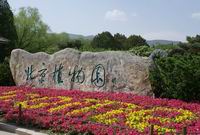
Introduction of Arboretum Beijing
The Beijing Arboretum (Botanical Garden) was built by the China Academy of Science in the early 1950s as one of its important bases for preserving and studying the flora of north, northeast and northwest China. Today the arboretum contains three parts: the exhibition zone of plants, the natural reserve zone and the zone of historical heritage.
The plant exhibition zone is subdivided into the zone of ornamental plants, garden of trees, bonsai garden, zone of greenhouse flower and scientific hall. In the 12 themed zones of the zone of ornamental plants visitors can view various beautiful plants like peon Chinese rose, green peach, clove bamboos, magnolia and many other aquatic ornamental plants.
The Peony garden to the west of the Temple of Reclining Buddha (peony is the national flower of China) is the most important in this zone. The over 3, 000 peonies of 262 categories are transplanted from the following important peony producing areas: Zhaolou, Liji, Helou, Hongmiao and Dengzhuang of Hezhe Shangdong province, Luoyang of Henan Province and Tianshui of Gansu Province etc. Among the pretty peony bushes are erected rockery, pavilions, stone sculptures, and pine trees. In the north of the zone there stands a high stone screen (17.2 m X 4.3 m X 1. 4m) on which there is a huge mural entitled the Fairy of Peony. The mural is derived from a story of Liao Zai Zhi Yi, or The Strange Stories from a Chinese Studio by Pu Songling in the early Qing Dynasty.
In the zone of trees, there grow such rare species as ginkgo. The hall of science was constructed in 1996 and the zone of greenhouse, built in 2000, ranks as the largest greenhouse for exhibition in Asia and house over 1, 000 sorts of tropical and subtropical plants. The bonsai garden was built in 1955 and among the oldest gardens in the arboretum.
In the zone of historical heritage, one sees the famous Temple of Reclining Buddha, the Valley of Cherry, the Ruins of the Longjiao Temple, the Memorial to the 12. 9 Movement, the tomb of Liang Qichao (1873–1929, Chinese reform leader, he together with his teacher Kang Youwei launched a movement for constitutional and educational reform in 1898, but the “hundred days’ reform” was aborted by the Empress Dowager Cixi and he fled to Japan afterwards) and the Memorial of Chao Xueqing (Writer of A Dream of the Red Mansions) The temple of the Reclining Buddha was initially built in the early years of Zenguan of the Tang Dynasty.
The main architecture of the temple - the third hall is the Hall of the Reclining Buddha, containing a copper statue 5.2 meters in length in recumbent position with one arm straightened and the other turned to support the head. It was claimed that 250,000 kilograms of copper was used to cast the enormous statue. The statue was completed in 1321. Around the Reclining Buddha are twelve smaller statues.
It is said that the posture of the group represents a scene in which Sakyamuni was giving instructions to his disciples under the bodhi tree while he was ill. To make the setting conform to the story, several bodhi trees were planted in the temple. They are believed to have come from India.
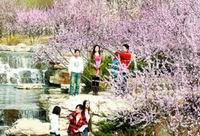
To the northwest of the Temple of Reclining Buddha is a nature reserved called Yintaogou, or the valley of Cherry that is known for its superior natural environment. This beautiful serve is also called Tuigu or the Valley of Retreat and the Garden of Zhou Family. Here is home to such “living fossils” as metasequoia and red pine tree etc.
Beijing-Travels.com offers online information on Beijing Arboretum (Botanical Garden), Keep browsing our site for More Attractions information in Beijing China.
Special Offer Travels
Beijing-Travels.com is a full service local travel agency offers popular travel packages to Beijing, Great Wall and all over of China. We specialize in "PRIVATE" & "NO-SHOPPING" tours and try to be original, unique and best to satisfy our clients, Let us assist you to experience your own vacations!
 home
home about us
 Testimonials
 sales@beijing-travels.com
 0086-13801067568
